Table of Contents
- Knowledge Base
- Infection Prevention
- Cleaning Your Cleaning Tools: Oxymoron or Infection Prevention Best Practice?
 Contec Professional
 Healthcare EVS, Infection Prevention, Article
Cleaning Your Cleaning Tools: Oxymoron or Infection Prevention Best Practice?
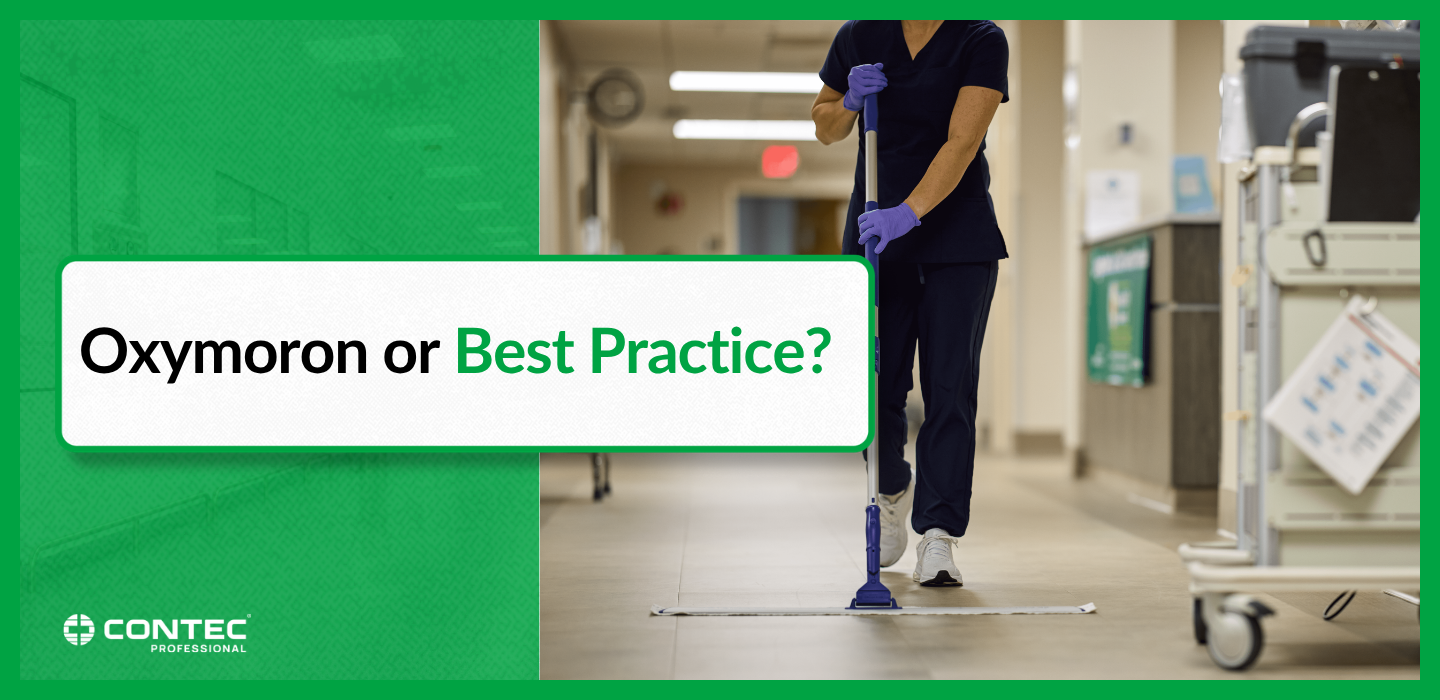
Infection Preventionist and EVS Technicians Ask—Are Our Tools Really Clean?
What happens when the tools used to clean become sources of contamination themselves?
Why Do Cleaning Tools Become Contaminated?
From an infection preventionist’s perspective, the risk is clear:
Cleaning tools frequently contact bioburden, organic soil, and pathogens on high-touch surfaces.
For the EVS team, that means:
- Mops and cloths absorb moisture and debris
- Microorganisms become trapped in fibers
- Tools can act as reservoirs for contamination
According to the CDC Environmental Infection Control Guidelines, contaminated cleaning materials can contribute to the spread of pathogens if not properly handled.
Bottom line: A dirty tool can’t deliver a clean surface.
What Challenges Exist When Cleaning Cleaning Tools?
On paper, laundering or rinsing should restore cleaning tools—but in practice, it’s not always reliable.
Key Challenges:
- Inconsistent laundering conditions (temperature, chemistry, cycle time)
- Residual organic matter embedded in fibers
- Lack of validation and quality control
Infection preventionists know that without standardized processes, there’s no guarantee tools are truly clean.
Research published in the American Journal of Infection Control (AJIC) has shown that microfiber materials can retain bioburden even after laundering, raising concerns about reuse in healthcare settings.
For EVS teams, that creates uncertainty—and risk.
How Does Tool Contamination Impact Infection Prevention?
When contaminated tools are reused, they can undermine even the best cleaning protocols.
1. Cross-Contamination Between Areas
EVS technicians may unknowingly:
- Transfer pathogens room-to-room
- Spread contamination across high-touch surfaces
- Compromise isolation protocols
2. Reduced Disinfectant Effectiveness
Infection preventionists understand the chemistry:
- Organic matter binds to disinfectants
- Active ingredients are neutralized
- Surface disinfection becomes less effective
This directly impacts infection prevention outcomes and patient safety.
What Strategies Improve EVS Cleaning Tool Hygiene?
To reduce risk, both EVS technicians and infection preventionists focus on consistency, standardization, and risk reduction.
Improve Laundering Processes
- Follow validated protocols aligned with CDC and AHE guidance
- Ensure proper washing, drying, and storage
- Monitor quality control
✔ Helpful Resource:
Transition to Disposable Cleaning Tools
Many healthcare facilities are moving toward single-use microfiber systems to eliminate variability.
Benefits for EVS Teams:
- No laundering uncertainty
- Reduced cross-contamination risk
- Consistent performance every time
- Simplified training and compliance
Clean Tools = Safer Outcomes
For EVS technicians and infection preventionist, the goal is the same: safer healthcare environments.
Cleaning tools are essential—but only when they perform reliably. As research continues to highlight the risks of reusable textiles, healthcare teams are rethinking traditional practices.
By prioritizing consistency, validated processes, and innovative solutions, facilities can reduce cross-contamination and strengthen infection prevention programs.
Key Takeaways
- Cleaning tools can become reservoirs of bacteria and organic matter
- Laundering does not always eliminate contamination
- Reuse increases cross-contamination risk
- Residual soil can reduce disinfectant effectiveness
- Disposable tools offer greater consistency and safety
 return to overview
 back to top