How Healthcare Facilities Are Achieving Cleaning Consistency Despite EVS Staffing Shortages
How Healthcare Facilities Are Achieving Cleaning Consistency Despite EVS Staffing Shortages
Yet patient expectations, regulatory requirements, and infection prevention goals have never been higher.
Leading healthcare organizations are responding by simplifying cleaning workflows, standardizing cleaning systems, and implementing processes that make it easier for every team member—regardless of experience level—to deliver consistent results.
The Staffing Challenge Facing Healthcare EVS Teams
Healthcare workforce shortages remain one of the most significant operational challenges facing hospitals today. According to the American Hospital Association's 2026 Environmental Scan, workforce recruitment, retention, and employee well-being continue to be strategic priorities for healthcare leaders as they adapt to ongoing labor shortages and increasing patient demand.
For Environmental Services departments, these workforce challenges often lead to:
- More frequent onboarding of new employees
- Increased training demands on experienced staff
- Greater variation in cleaning practices between shifts
- Reduced time for quality monitoring and coaching
- Increased pressure to maintain high cleaning standards with fewer resources
The challenge isn't simply finding more staff—it's ensuring every member of the team can perform cleaning tasks consistently and confidently.
Cleaning consistency is no longer just an operational objective—it's a workforce strategy.
Why Cleaning Consistency Matters
Environmental cleaning is one of the foundational components of infection prevention.
The Centers for Disease Control and Prevention (CDC) states that effective environmental cleaning programs rely on more than selecting the right disinfectants. Successful programs also require standardized policies and procedures, staff training, ongoing monitoring, and routine performance feedback.
When cleaning methods vary between employees or shifts, healthcare facilities may experience:
- Inconsistent surface coverage
- Variable disinfectant application
- Missed high-touch surfaces
- Greater supervisory burden
- Increased opportunity for cross-contamination
Consistency helps ensure that every patient room receives the same high standard of care, regardless of who performs the cleaning.
How Leading Hospitals Are Simplifying Cleaning Workflows
Many healthcare organizations are moving away from complicated cleaning processes in favor of standardized workflows that reduce variation and improve efficiency.
Rather than relying on individual preferences or experience, standardized workflows establish repeatable procedures that every employee can follow.
Examples of standardized cleaning workflows in hospital systems include:
- Standard room cleaning sequences
- Clearly defined cleaning zones
- Product standardization across departments
- Visual work instructions
- Disposable cleaning systems that eliminate preparation and laundering steps
Simplifying workflows reduces unnecessary decision-making, allowing EVS professionals to focus on thorough cleaning rather than equipment preparation or process variation.
The Value of Standardized Cleaning Systems
Standardization creates consistency.
Rather than allowing each employee or department to develop its own process, standardized cleaning systems establish a repeatable approach that supports quality across the entire facility.
According to the CDC, effective environmental cleaning programs should include:
- Clearly documented policies and procedures
- Standardized training
- Appropriate staffing and supervision
- Routine monitoring and feedback
- Consistent equipment and supplies
These elements help create a cleaning program that is easier to manage, easier to audit, and easier to improve over time.
| Traditional Cleaning Approach | Standardized Cleaning System |
|
Longer onboarding |
Faster employee training |
|
Variable cleaning techniques |
Consistent cleaning processes |
|
Different products by department |
Standardized equipment and supplies |
|
Greater opportunity for user error |
Reduced workflow variation |
|
More time spent correcting performance |
More time spent improving quality |
Reducing Training Complexity
High turnover means onboarding has become a continuous process for many healthcare facilities. The easier a cleaning system is to understand, the faster new employees can become productive.
Cleaning systems designed for simplicity often feature:
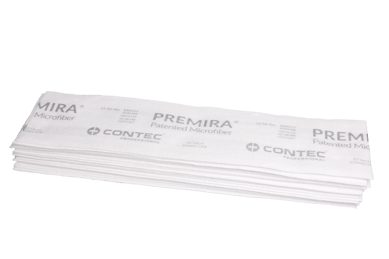
- Easy-to-use equipment
- Minimal assembly
- Fewer preparation steps
- Clear visual instructions
- Standard operating procedures that remain consistent across every shift
Expert Perspective
At Contec Professional, we've worked alongside Environmental Services professionals for decades.
One trend has become increasingly clear: healthcare facilities aren't simply searching for products that clean effectively—they're looking for cleaning systems that are easier to implement, easier to teach, and easier to execute consistently.
When cleaning processes become simpler, consistency improves. Supervisors spend less time correcting inconsistencies, new employees gain confidence faster, and experienced team members can focus on mentoring and continuous improvement rather than constant retraining.
The key takeaway is that the most sustainable cleaning system is not necessarily the one that creates the least waste—it is the one that minimizes total resource consumption throughout its lifecycle.
Looking Ahead
 Healthcare staffing challenges are unlikely to disappear overnight.
Organizations that invest in standardized cleaning systems, simplified workflows, and consistent training processes will be better positioned to maintain high cleaning standards despite workforce fluctuations.
Ultimately, consistency isn't achieved through working harder—it's achieved by building systems that make doing the right thing the easiest thing.
Continue Exploring
If you're looking to strengthen your EVS program, these additional resources can help:
- Explore our Interactive Patient Room Cleaning Experience
- Learn why more hospitals are transitioning to disposable microfiber mop systems
- Discover best practices for reducing cross-contamination in patient care environments
- Explore the Premira® Disposable Microfiber product line.
- Learn more about the ZeroGravity® Mopping System
Frequently Asked Questions
Why is cleaning consistency important in healthcare?
Consistent cleaning practices help reduce process variation, support infection prevention initiatives, and ensure patient rooms receive the same level of cleaning regardless of who performs the work.
How do staffing shortages affect Environmental Services?
Staffing shortages increase turnover, create ongoing training demands, and make it more difficult to maintain consistent cleaning practices across multiple shifts.
What is a standardized cleaning system?
A standardized cleaning system uses consistent products, procedures, workflows, and training materials throughout a healthcare facility to improve cleaning quality and reduce variation.
How can hospitals reduce EVS training time?
Hospitals can simplify onboarding by implementing standardized equipment, clear standard operating procedures, visual work instructions, and cleaning systems that reduce preparation and workflow complexity.
Why are more healthcare facilities simplifying cleaning workflows?
Simplified workflows reduce decision fatigue, improve employee confidence, shorten onboarding time, and make it easier to maintain consistent cleaning practices across departments.
Key Take-Aways
- Standardization Drives Consistency
Implementing standardized cleaning systems and workflows helps ensure every patient room is cleaned consistently, regardless of staffing levels or employee experience. - Simpler Processes Reduce Training Burden
Streamlined cleaning procedures and easy-to-use tools shorten onboarding time, improve employee confidence, and help new team members become productive more quickly. - Consistent Cleaning Supports Better Patient Outcomes
Reducing process variation strengthens infection prevention efforts, improves operational efficiency, and helps healthcare facilities maintain high cleaning standards despite ongoing workforce challenges.
References
- Centers for Disease Control and Prevention. Cleaning Programs | Healthcare-Associated Infections (HAIs). https://www.cdc.gov/healthcare-associated-infections/hcp/cleaning-global/programs.html
- Centers for Disease Control and Prevention. Introduction: Environmental Cleaning in Healthcare Facilities. https://www.cdc.gov/healthcare-associated-infections/hcp/cleaning-global/introduction.html
- American Hospital Association. 2026 Environmental Scan. https://www.aha.org/environmentalscan