 Contec Professional
 11/04/2026

 EVS,
Healthcare EVS,
Training
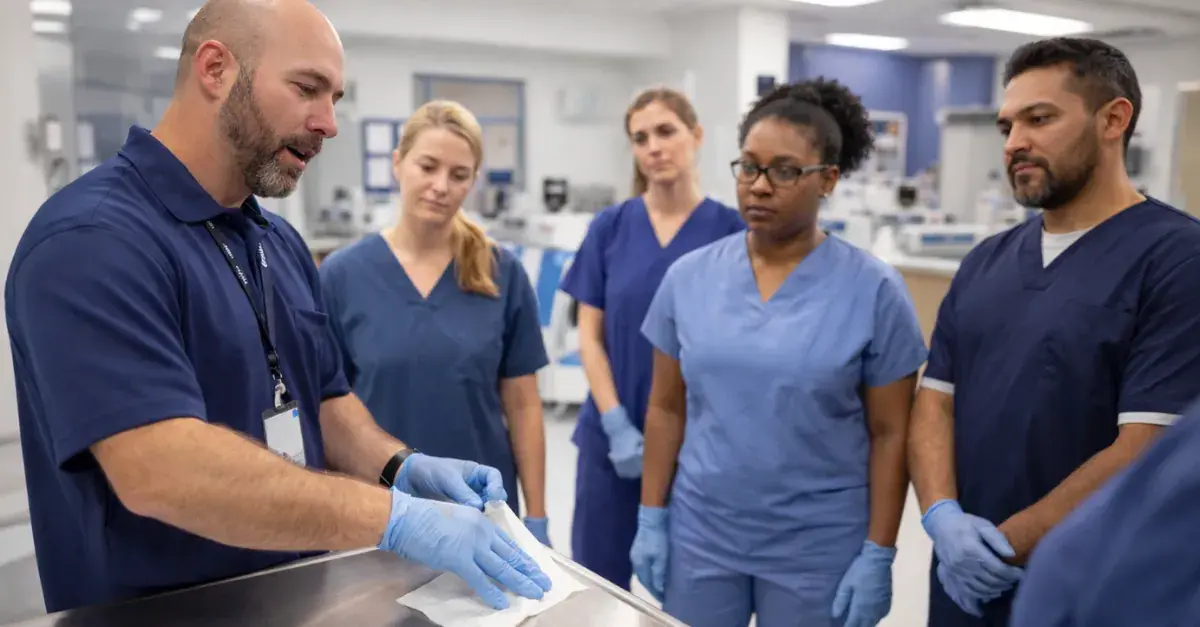
Same hospital. Same SOP. Same cleaning products. So why can the process look different from one shift—or even one room—to the next?
For EVS leaders, that's the challenge.
You're balancing room turnover, staffing gaps, new-hire training and changing priorities—all while making sure spaces are cleaned correctly and on time.
And when it comes to healthcare cleaning, consistency matters.
The Centers for Disease Control and Prevention (CDC) identifies environmental cleaning and disinfection as a core infection prevention practice. CDC guidance emphasizes standardized procedures, appropriate products, employee training, monitoring and feedback as components of a clean and safe healthcare environment.
For EVS leaders, the opportunity is clear:
Make the right way to clean the easier way to clean.
Why is consistency important in EVS cleaning?
Even a strong cleaning procedure can break down when workloads increase, employees change or different shifts approach the same task differently.
CDC environmental cleaning guidance recommends detailed cleaning schedules that define what should be cleaned, how often, by whom and using which methods or products. It also recommends SOPs, checklists and other job aids to support effective cleaning.
For an EVS manager, that translates to a simple goal:
Reduce the number of decisions your team has to make in the moment.
Clear expectations and readily available tools give employees a more defined path to follow—even when you're not standing beside them.
How can EVS leaders make cleaning more consistent?
Start by looking for unnecessary variation.
Are different shifts performing the same procedure differently? Are new employees learning the same process as experienced technicians? Are employees losing time finding or preparing supplies?
Sometimes improving consistency doesn't require another procedure.
It requires simplifying the one you already have.
Standardize the process—and the tools
The CDC's Core Components for environmental cleaning and disinfection include standardizing setting-specific protocols, educating personnel, selecting appropriate products, monitoring adherence and providing feedback.
The products technicians use can either simplify those processes or add more steps.
Consider microfiber mop pads. Reusable programs require facilities to manage collection, laundering, storage and redistribution.
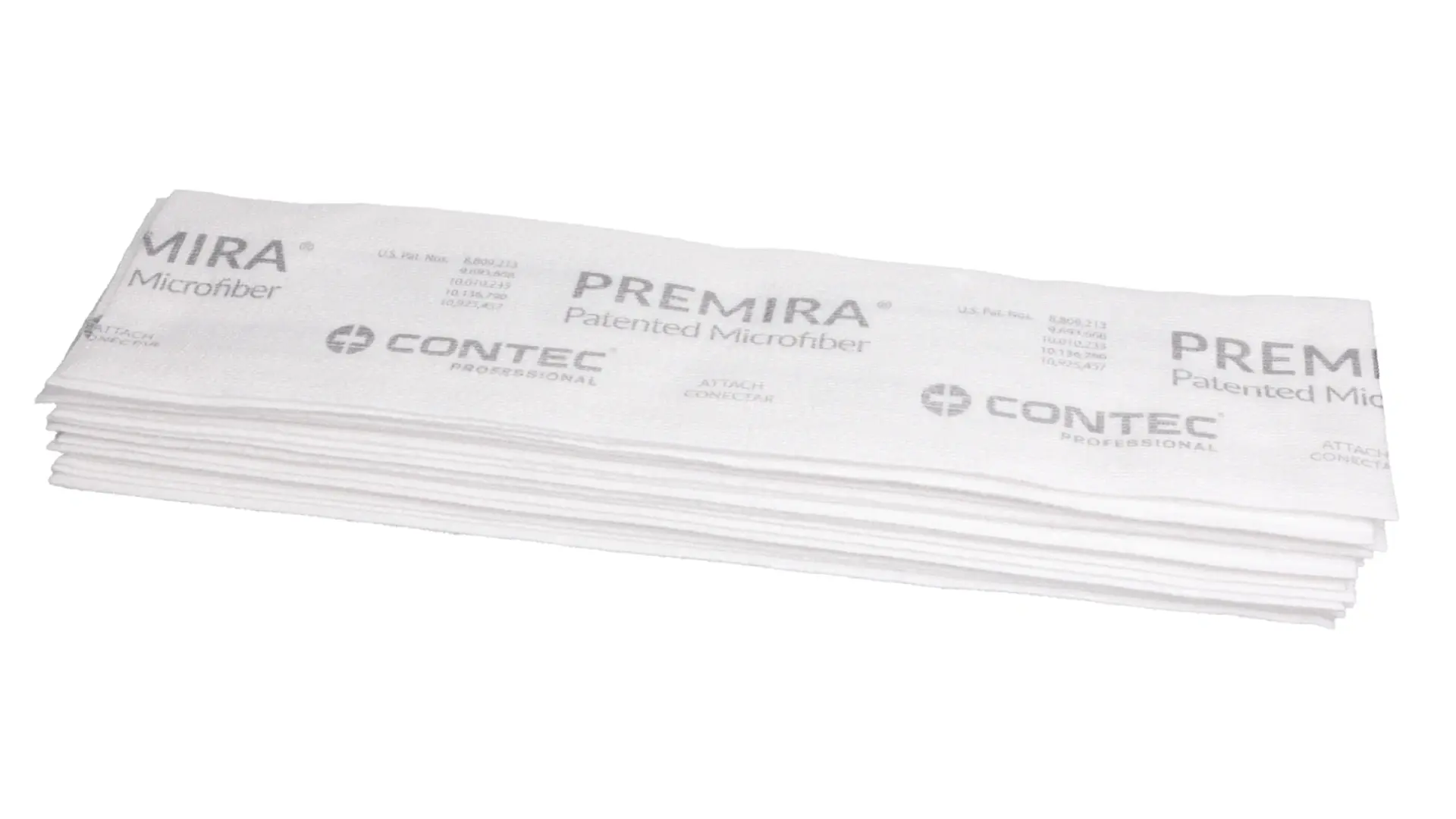
Premira® Disposable Microfiber Mop Pads from Contec Professional provide a fresh pad without adding laundering back into the workflow.
It's one example of a larger principle:
The easier a cleaning system is to use correctly, the easier it can be to repeat.
How does training improve EVS consistency?
Training gives EVS technicians a shared understanding of what needs to happen and what successful cleaning looks like.
The CDC identifies education and training as a core component of environmental cleaning programs. The Association for the Health Care Environment (AHE) also emphasizes frontline EVS education through its Certified Health Care Environmental Services Technician (CHEST) program.

But EVS leaders know the challenge: training time isn't unlimited.
When you're covering rooms, onboarding employees and managing schedules, unnecessary complexity makes training harder.
Simple tools, clearly defined processes and standardized workflows can help. Instead of relying on experienced employees to simply know how we do things, you're creating a system everyone can follow.
How do you know whether the process is working?
Measure it—and do something useful with what you learn.
Monitoring shouldn't just be about catching mistakes. It should help answer:
Where is our process breaking down, and what can we change to make success easier?
Research shows the value of measurement and feedback. In a multicenter study involving 36 acute-care hospitals, 48% of standardized environmental surfaces were cleaned at baseline. Following interventions that included objective monitoring and feedback to EVS personnel, that figure increased to 77%.
The multicenter REACH trial provides another example. Its environmental cleaning bundle incorporated product use, cleaning technique, staff training, auditing, feedback and communication. Following implementation, frequent-touch points cleaned increased from 55% to 76% in bathrooms and 64% to 86% in bedrooms.
The takeaway isn't that one product or process prevents healthcare-associated infections.
It's that structured programs combining processes, appropriate tools, training, monitoring and feedback can improve environmental cleaning performance.
What if you don't know where the inconsistencies are?
Maybe one shift is getting different results. Room turnover is taking longer than expected. Employees have developed workarounds. Or you're wondering whether different tools could simplify the process.
That's where side-by-side support can help.
At Contec Professional, we work with EVS teams to understand how cleaning actually happens—not simply how the SOP says it's supposed to happen.
Through a Contamination Control Assessment (CCA), Contec takes a collaborative look at current practices to help identify potential gaps, inefficiencies, product mismatches and training opportunities.
Because sometimes the solution isn't adding another step.
Sometimes it's removing one.
Better tools should make your team's job easier
Innovation isn't valuable just because something is new. For an EVS leader juggling staffing, training, productivity and cleaning expectations, innovation should solve a problem or make an existing process easier.
Solutions such as Premira® Disposable Microfiber Mop Pads, ContecClean® Cloths, High Duster systems and ergonomic mopping hardware are designed around the realities of professional cleaning—including efficiency, ease of use and repeatability.
But products are only part of the equation.
Contec works side by side with EVS teams to determine what makes sense for their facility. That might mean introducing a different tool, simplifying a workflow or providing additional training.
We start by understanding the problem—not simply prescribing a product.
Make every cleaning step count
EVS teams are being asked to accomplish a lot: clean effectively, turn rooms quickly, train employees, manage staffing, support infection prevention and document performance.
You can't eliminate every challenge. But you can build processes that make doing the right thing simpler and more repeatable.
Ask four questions:
- Is the process clear?
- Are the tools helping?
- Can we teach it consistently?
- Can we measure the results?
When those pieces work together, consistency becomes less dependent on who's working that day—and more embedded in the cleaning program itself.
Ready to find opportunities to simplify your cleaning process?
Talk with Contec Professional about how innovative cleaning solutions, practical expertise and side-by-side support can help your team build more efficient, repeatable cleaning processes.
 return to overview
 back to top